








.png)
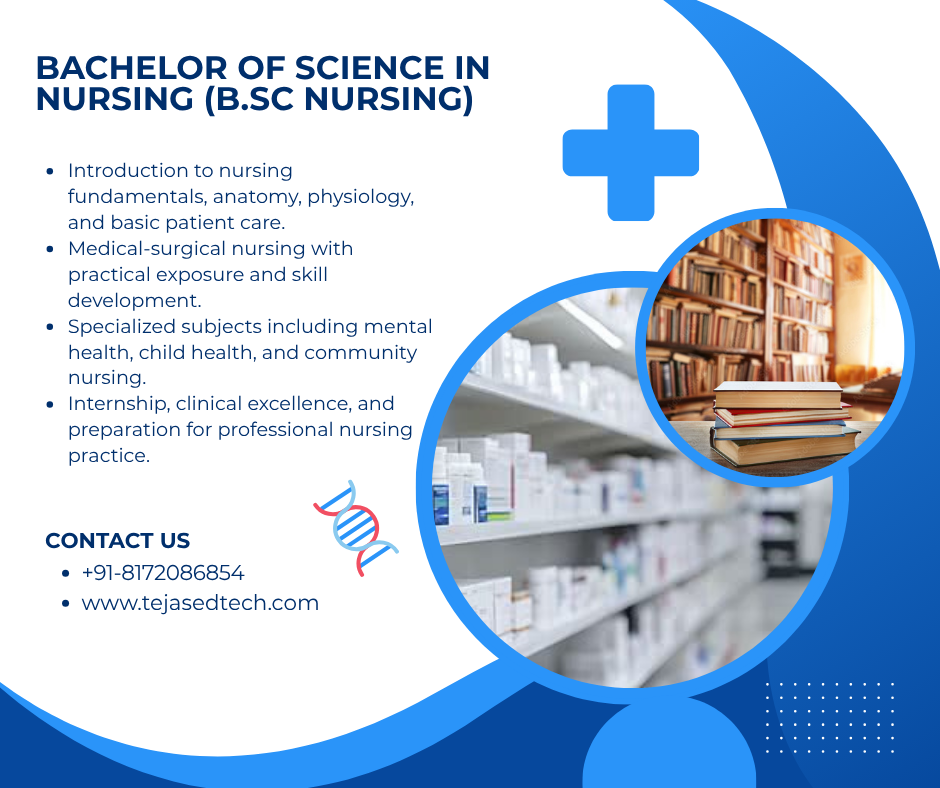
The Bachelor of Science in Nursing (B.Sc Nursing) – Second Year is a crucial academic phase that strengthens students’ foundational knowledge and enhances their clinical competence. In this year, students transition from basic nursing concepts to more specialized and practical aspects of patient care.
The primary subject in the second year is Medical-Surgical Nursing, where students learn about various diseases, their causes, symptoms, diagnostic procedures, medical and surgical management, and nursing interventions. This subject equips students to handle adult patients with acute and chronic health conditions in hospital settings.
Another important subject is Pharmacology, which teaches students about different classes of drugs, their actions, side effects, dosages, and safe administration techniques. Understanding pharmacology ensures safe medication practices and minimizes errors in clinical settings.
Students also study Pathology and Genetics, which helps them understand disease processes, cellular changes, hereditary disorders, and diagnostic investigations. This knowledge allows nurses to better interpret patient conditions and lab reports.
Additionally, Sociology is included to help students understand social structures, cultural influences, family dynamics, and community factors that affect health and illness.
Clinical postings form a major part of the second year. Students are posted in medical and surgical wards of hospitals, where they apply theoretical knowledge in real-life patient care under supervision. They learn skills such as patient assessment, medication administration, wound care, documentation, communication, and teamwork.
Overall, the second year of B.Sc Nursing plays a vital role in shaping competent, confident, and responsible nursing professionals ready for advanced clinical training in the upcoming years.










Reply to Comment